When you ask ChatGPT for the best accountant, project tool, or supplement brand, it does not pull a name at random. It answers from patterns it has seen across the web: the brands that keep showing up in the sources it reads and trusts. Those mentions are citations, and they are the quiet mechanism behind almost every AI recommendation.
If you want AI to recommend your brand, this is the part to understand.
What is an AI citation?
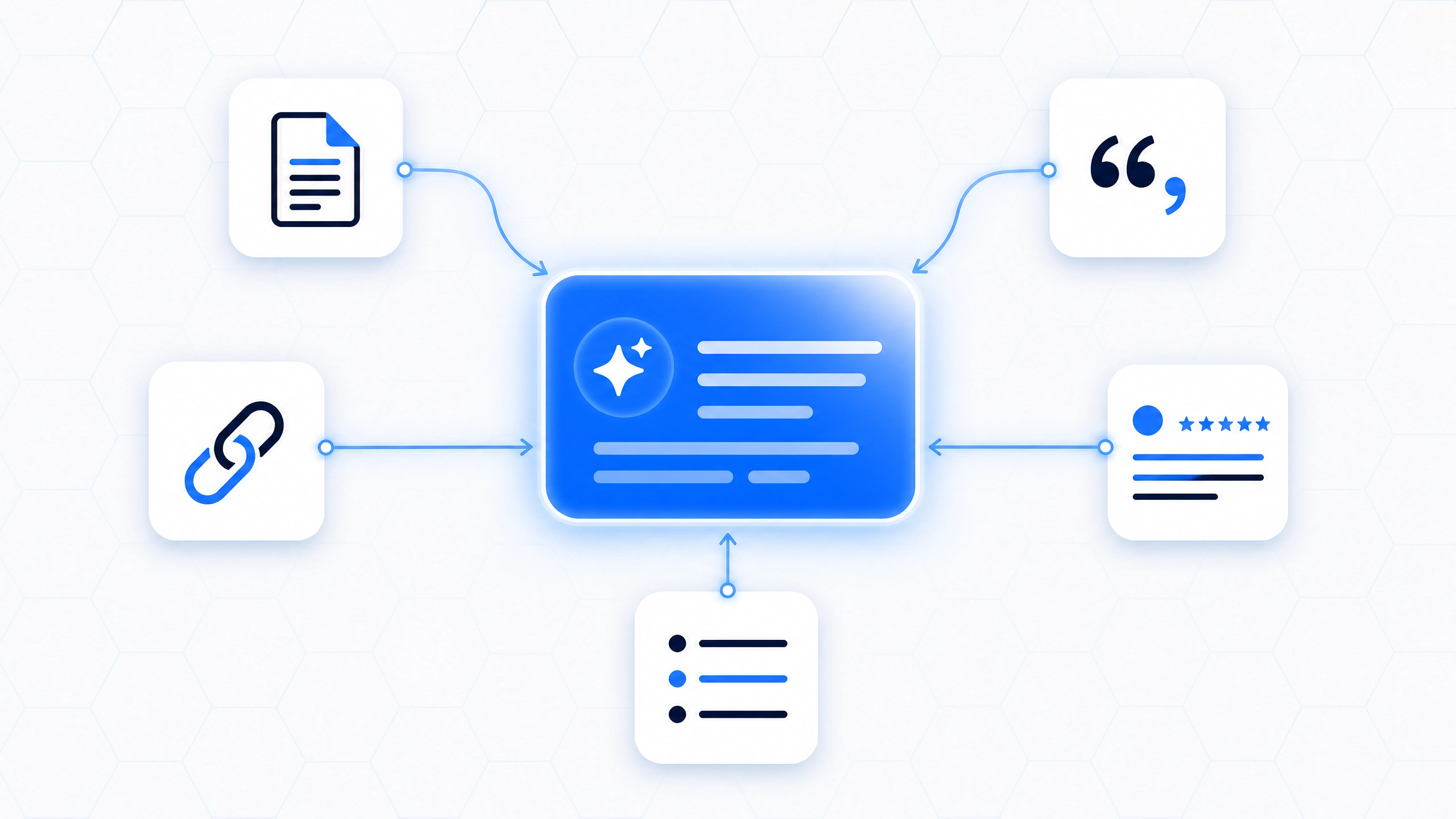
An AI citation is any place a model draws on when it builds an answer: an article, a directory, a review, a comparison page, a forum thread, a news mention. When ChatGPT, Gemini, Claude, Perplexity, Meta AI, and more answer a buying question, they lean on these sources to decide which brands to name. A citation is your brand showing up inside one of them.
Think of it as the AI era's version of a reference. The more of the right sources mention you, the more the model treats you as an obvious answer.
Why citations decide who gets recommended
AI models do not have opinions about your brand. They reflect what the web says about it. When a customer asks for the best option in your category, the model looks for names that appear consistently across the sources tied to that topic. A brand cited often, in the places the model trusts, becomes a safe recommendation. A brand absent from those sources stays invisible, no matter how good the product is.
This is why two competitors with similar products can get very different AI results. One is present in the sources AI reads. The other is not.
Is this the same as backlinks?
It rhymes with SEO, but it is not the same. Backlinks were built to influence Google's ranking. Citations influence what a model says when someone asks it a question directly, and that customer may never open a search engine at all. Some sources overlap, but the goal is different: you are optimizing to be named in an answer, not to rank on a results page.
How to see your AI citations
You measure them. That is what the AI Citation Index in the Reddlix Suite is for. It builds a customized library of the prompts your potential customers actually ask across your niche, then tracks how often AI cites your brand in the answers and how that changes over time.
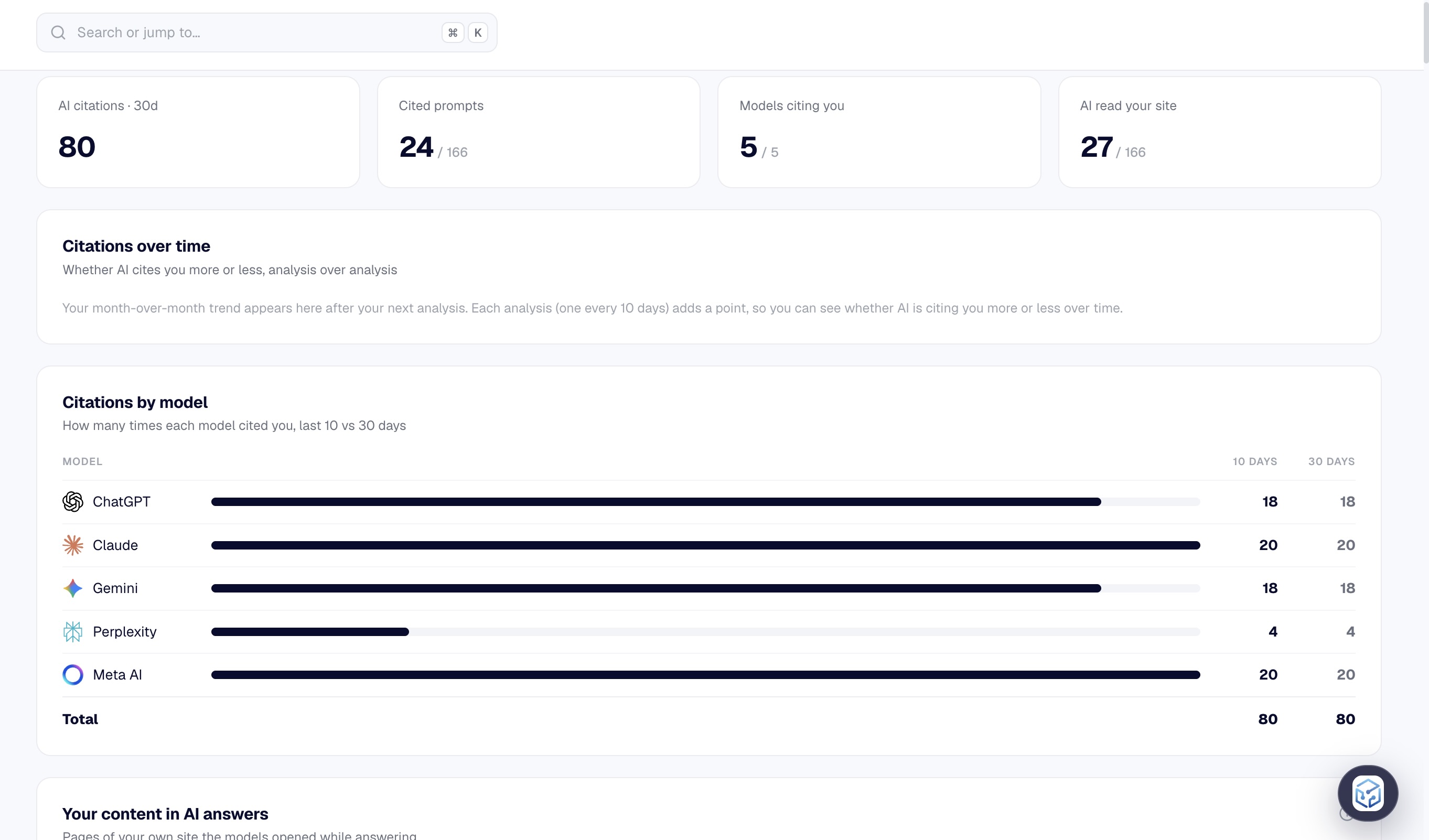
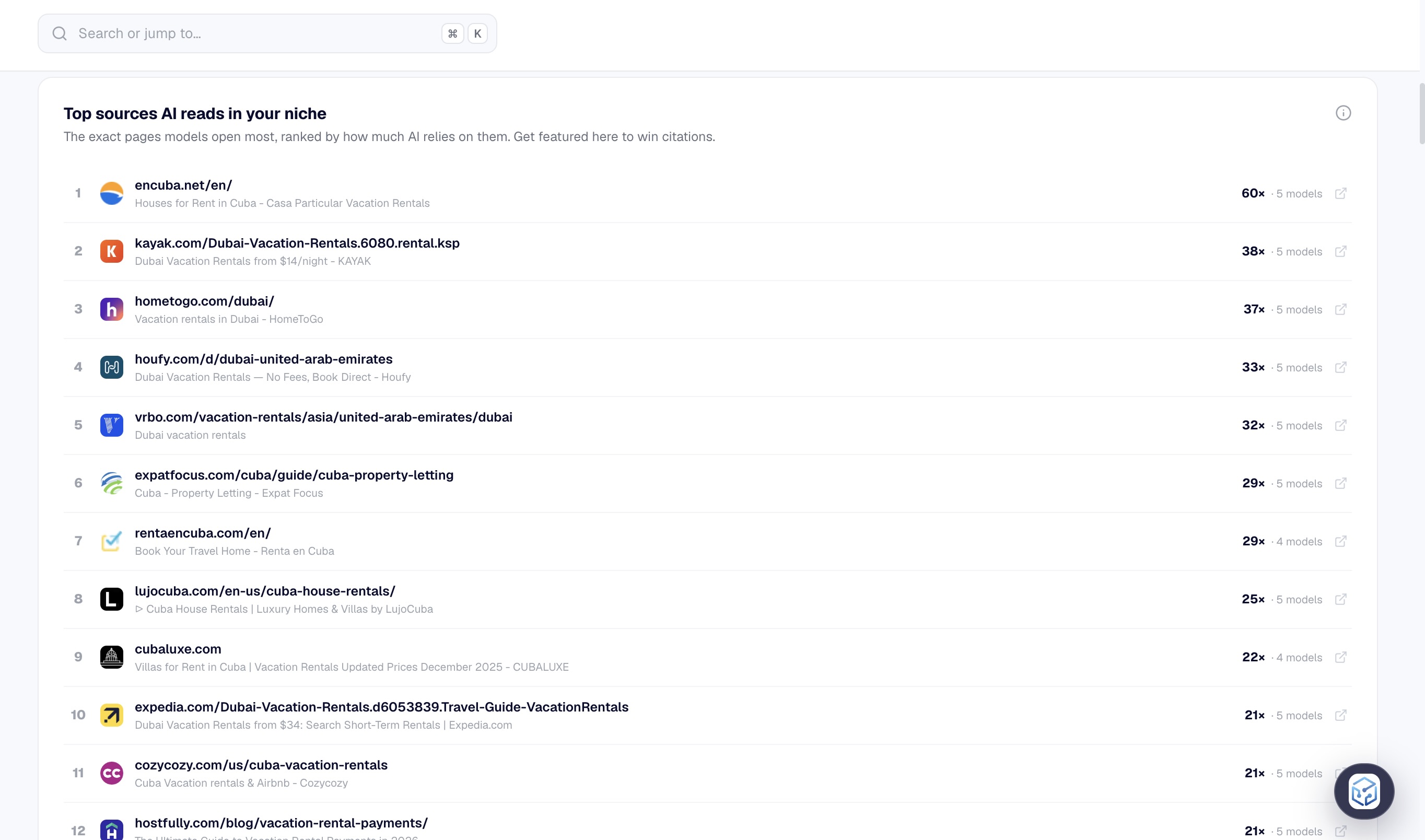
Alongside it, you get the sources you should target and create content for so AI starts to pick you up, plus a read on your market and where competitors are earning citations you are not. Instead of guessing whether AI knows you, you see the exact prompts, your citation rate, and the specific pages and platforms to go after.
How to earn more AI citations
Once you can see where the gaps are, the work gets direct. Get mentioned in the sources AI already trusts for your category: the directories, comparison articles, review sites, and publications that keep showing up in answers. Keep your brand details consistent everywhere, so the model ties every mention to the same business. Publish content that answers the real questions buyers ask, so your own pages become citable sources. Then measure again, and see which moves actually lift your citation rate.
Why start now
AI search is still forming. The brands that become the cited answer early tend to stay the cited answer, the same way early SEO winners held their ground for years. Every month your competitors collect citations you do not is a month of buyers being pointed somewhere else. Measuring your citations is the first step to changing that.
See how often AI cites your brand, and the sources to target next, with the Reddlix Suite.